As a check valve supplier, I’ve witnessed firsthand the crucial role that various physical parameters play in determining the performance of check valves. One such parameter is the Weber number, a dimensionless quantity that has a significant impact on the behavior and functionality of check valves. In this blog post, I’ll delve into how the Weber number affects check valve performance and why it’s essential for engineers and procurement professionals to understand this relationship. Check Valve

Understanding the Weber Number
The Weber number (We) is a dimensionless number that represents the ratio of inertial forces to surface tension forces in a fluid flow. It is defined as:
[We=\frac{\rho v^{2}L}{\sigma}]
where (\rho) is the density of the fluid, (v) is the velocity of the fluid, (L) is a characteristic length (such as the diameter of the valve opening), and (\sigma) is the surface tension of the fluid.
The Weber number is particularly important in applications where surface tension effects are significant, such as in the flow of liquids with free surfaces or in the formation of droplets. In the context of check valves, the Weber number can influence the valve’s opening and closing behavior, as well as its ability to prevent backflow.
Impact on Valve Opening
When a fluid flows through a check valve, the Weber number can affect the valve’s opening mechanism. At low Weber numbers, surface tension forces dominate, and the valve may require a higher pressure differential to open. This is because the surface tension of the fluid tends to hold the valve closed, making it more difficult for the fluid to overcome the resistance and push the valve open.
As the Weber number increases, inertial forces become more significant relative to surface tension forces. This means that the fluid can more easily overcome the surface tension and open the valve. At high Weber numbers, the valve may open more quickly and with less resistance, resulting in a more efficient flow of fluid through the valve.
Impact on Valve Closing
The Weber number also plays a role in the valve’s closing behavior. When the flow of fluid through the valve stops or reverses, the valve must close to prevent backflow. At low Weber numbers, surface tension forces can help to keep the valve closed, even when there is a small pressure differential. This is because the surface tension of the fluid acts as a seal, preventing the fluid from flowing back through the valve.
However, at high Weber numbers, inertial forces can cause the valve to close more rapidly and with greater force. This can lead to issues such as water hammer, which can damage the valve and the piping system. To mitigate these effects, it may be necessary to use a check valve with a damping mechanism or to design the system to reduce the impact of high Weber numbers.
Impact on Flow Characteristics
In addition to affecting the valve’s opening and closing behavior, the Weber number can also influence the flow characteristics of the fluid through the valve. At low Weber numbers, the flow may be laminar, with the fluid flowing in smooth, parallel layers. This can result in a lower pressure drop across the valve and a more stable flow.
As the Weber number increases, the flow may become turbulent, with the fluid flowing in a chaotic, irregular pattern. This can lead to a higher pressure drop across the valve and a less stable flow. In some cases, turbulence can also cause cavitation, which can damage the valve and the piping system.
Considerations for Check Valve Design and Selection
When designing or selecting a check valve, it’s important to consider the Weber number and its impact on valve performance. Here are some key considerations:
- Fluid Properties: The density, velocity, and surface tension of the fluid can all affect the Weber number. It’s important to choose a check valve that is designed to operate within the expected range of Weber numbers for the specific application.
- Valve Size and Configuration: The size and configuration of the check valve can also influence the Weber number. A larger valve opening may result in a higher Weber number, while a smaller valve opening may result in a lower Weber number. It’s important to choose a valve size and configuration that is appropriate for the flow rate and pressure requirements of the application.
- Damping Mechanisms: To mitigate the effects of high Weber numbers, it may be necessary to use a check valve with a damping mechanism. This can help to reduce the impact of water hammer and other issues associated with rapid valve closing.
- System Design: The design of the piping system can also affect the Weber number and the performance of the check valve. It’s important to consider factors such as pipe diameter, length, and roughness, as well as the presence of bends, fittings, and other components that can affect the flow of fluid through the system.
Conclusion
The Weber number is an important parameter that can have a significant impact on the performance of check valves. By understanding the relationship between the Weber number and valve performance, engineers and procurement professionals can make more informed decisions when designing and selecting check valves for their applications.
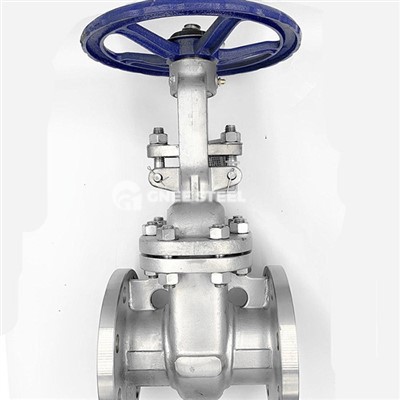
As a check valve supplier, we have the expertise and experience to help you choose the right check valve for your specific needs. Whether you’re looking for a valve that can handle high Weber numbers or a valve that is designed to operate in a low Weber number environment, we can provide you with the solutions you need.
Check Valve If you’re interested in learning more about how the Weber number affects check valve performance or if you have any questions about our check valve products, please don’t hesitate to contact us. We’d be happy to discuss your requirements and help you find the right solution for your application.
References
- Munson, B. R., Young, D. F., & Okiishi, T. H. (2013). Fundamentals of Fluid Mechanics. John Wiley & Sons.
- White, F. M. (2016). Fluid Mechanics. McGraw-Hill Education.
- Idelchik, I. E. (2007). Handbook of Hydraulic Resistance. Begell House Inc.
GNEE (Tianjin) Multinational Trade Co.,Ltd
As one of the most professional check valve manufacturers and suppliers in China, we’re featured by quality products and competitive price. Please rest assured to wholesale discount check valve in stock here and get free sample from our factory. For customized service, contact us now.
Address: No.4-1114, Beichen Building, Beicang Town, Beichen District, Tianjin, China
E-mail: sale@gneetube.com
WebSite: https://www.valves-supplier.com/
