As a seasoned travel bag supplier deeply entrenched in the industry, I’ve had the privilege of witnessing firsthand the evolution of travel gear. Among the many options available, hard – shell travel bags have long held a prominent place in the market, lauded for their durability, protection, and sleek appearance. However, like any product, they come with their own set of disadvantages that consumers and fellow industry players should be aware of. Travel Bag

Weight
One of the most significant drawbacks of hard – shell travel bags is their weight. Unlike soft – shell alternatives, which are often made from lightweight materials such as nylon or polyester, hard – shell bags are constructed with rigid materials like polycarbonate or aluminum. These materials, while providing excellent protection for your belongings, add a substantial amount of weight to the bag itself.
For frequent travelers, especially those who are subject to strict weight limits imposed by airlines, this can be a major inconvenience. Every extra pound in the bag’s weight means less space for your actual belongings. For example, if an airline allows you to check in a bag weighing no more than 23 kilograms, and your hard – shell bag itself weighs 3 – 4 kilograms, you’re already sacrificing a significant portion of your allowed weight. This can lead to difficult decisions about what to pack and what to leave behind, potentially ruining your travel plans.
Moreover, the added weight can make the bag cumbersome to carry, especially when navigating through airports, train stations, or other transportation hubs. You’ll find yourself expending more energy just to move the bag from one place to another, which can be particularly tiring during long trips.
Limited Expandability
Hard – shell travel bags typically offer limited expandability compared to soft – shell bags. Soft – shell bags often come with adjustable straps, zippers, or additional compartments that can be expanded to accommodate extra items. In contrast, the rigid structure of hard – shell bags restricts their ability to stretch or adjust.
This lack of expandability can be a real problem when you’re returning from a trip with souvenirs or when you’ve done some shopping during your travels. You may find that your hard – shell bag is filled to capacity, and you have no way to add those extra items without either leaving them behind or risking damage to the bag by overpacking. Overpacking a hard – shell bag can lead to the zippers breaking or the shell cracking, which defeats the purpose of having a durable travel bag in the first place.
Cost
Another disadvantage of hard – shell travel bags is their cost. The materials and manufacturing processes used to produce hard – shell bags are generally more expensive than those for soft – shell bags. Polycarbonate, a popular material for hard – shell bags, is a high – quality plastic that is both strong and lightweight, but it comes at a premium price. Additionally, the precision engineering required to create a seamless and sturdy hard – shell design adds to the overall cost.
As a result, hard – shell travel bags are often significantly more expensive than their soft – shell counterparts. This can be a deterrent for budget – conscious travelers or those who only travel occasionally. For someone who takes a few short trips a year, investing in an expensive hard – shell bag may not be a cost – effective choice.
Lack of Flexibility
The rigid nature of hard – shell travel bags also means they lack flexibility. Unlike soft – shell bags, which can easily conform to different shapes and fit into tight spaces, hard – shell bags have a fixed shape that doesn’t change. This can be a problem when trying to store the bag in the overhead compartment of an airplane, under a train seat, or in a small car trunk.
In some cases, you may find that your hard – shell bag doesn’t fit into the available storage space, forcing you to check it in even if you had planned to keep it with you. This can increase the risk of your bag being lost, damaged, or delayed during transit.
Vulnerability to Scratches and Dents
While hard – shell bags are known for their durability, they are still vulnerable to scratches and dents. The smooth surface of a hard – shell bag makes it susceptible to showing every scratch and mark it accumulates during transport. Even the slightest bump or scrape can leave a visible blemish on the bag, which can be unsightly and detract from its overall appearance.
Dents can also be a problem, especially if they are severe enough to affect the functionality of the bag. For example, a dent near the zipper can make it difficult to open or close the bag properly. And unlike soft – shell bags, which can often bounce back from minor impacts, dents in hard – shell bags are usually permanent.
Limited Compartmentalization
Hard – shell travel bags often have less complex and less convenient compartmentalization compared to soft – shell bags. Soft – shell bags can be designed with multiple internal and external pockets, straps, and organizers to help you keep your belongings in order. These compartments can be very useful for separating items such as clothes, toiletries, electronics, and documents, making it easier to find what you need quickly.
In contrast, hard – shell bags typically have fewer compartments, and they are often less customizable. This can make it challenging to organize your belongings effectively, leading to a more chaotic packing experience and potentially making it more difficult to access your items during your trip.
Environmental Impact
The production of hard – shell travel bags also has a relatively high environmental impact. The materials used, such as polycarbonate and aluminum, require significant amounts of energy and resources to produce. Additionally, hard – shell bags are often more difficult to recycle than soft – shell bags made from materials like nylon or polyester.
As consumers become more environmentally conscious, the environmental impact of their purchases is becoming an increasingly important factor. The high carbon footprint associated with hard – shell travel bags may put some potential customers off, especially those who are committed to sustainable travel and consumption.
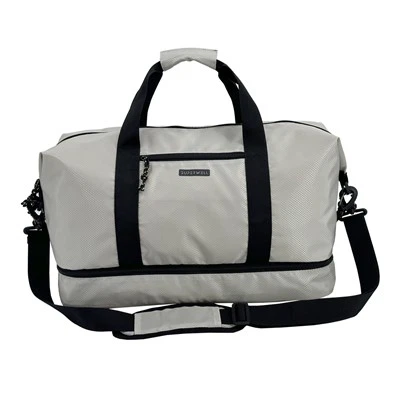
In conclusion, while hard – shell travel bags certainly have their advantages, such as protection and durability, it’s important for consumers to be aware of their disadvantages. As a travel bag supplier, I understand that different customers have different needs and preferences. Some travelers may prioritize the protection offered by a hard – shell bag, while others may value the flexibility and affordability of a soft – shell bag.
Diaper Bag If you’re in the market for a travel bag and are considering the pros and cons of hard – shell options, I’d be more than happy to discuss your specific requirements. We offer a wide range of travel bags, both hard – shell and soft – shell, to meet the diverse needs of our customers. Whether you’re a frequent flyer, a budget traveler, or an environmentally conscious consumer, we have a solution for you. Reach out to us to start a conversation about your travel bag needs and let’s find the perfect bag for your next adventure.
References
- "The Science of Travel Gear Materials" – Journal of Travel Equipment Research
- "Consumer Preferences in Travel Bags" – Travel and Tourism Marketing Quarterly
- "Environmental Impact of Consumer Goods Production" – Sustainable Consumption Journal
Quanzhou Superwell Imp.&Exp. Co.,Ltd
We’re professional travel bag manufacturers and suppliers in China, specialized in providing high quality custom service. We warmly welcome you to wholesale high-end travel bag made in China here from our factory.
Address: A1312, Binyuan, Lijingwan, Nanyi, Fuqiao Subdistrict,Quanzhou, Fujian, China
E-mail: rebecca@superwell-bag.com
WebSite: https://www.superwellbags.com/
