If you’ve ever stood near a power plant on a cool morning, you might have noticed a thin, wispy stream of steam rising from the turbine enclosure—wait, no, actually, that’s a sign of a poorly performing gland seal, and it’s more than just a minor inefficiency. For 12 years, I’ve been in the turbine gland seal business, and every time a plant operator calls to tell me their seal is failing, I don’t just hear a problem—I hear a gap in how most teams understand the core components that make these seals work. I’ve walked through enough turbine rooms to know that a seal isn’t just a single piece of rubber or metal; it’s a carefully calibrated system, and getting each part right is what keeps a turbine running smoothly, efficiently, and safely. Let’s break down exactly what makes up a turbine gland seal, from the parts you can see to the ones hidden deep inside, and why each one matters to your operations. Turbine Gland Seal
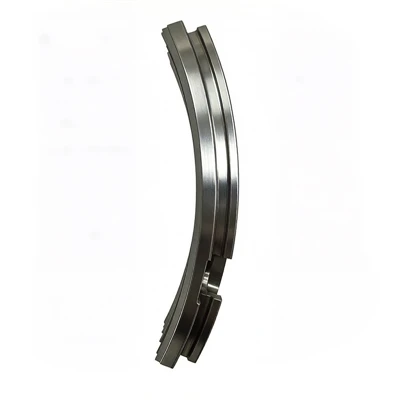
First, let’s ground this in what a turbine gland seal does, because the components are designed for a specific job: stopping high-pressure steam from leaking out of the turbine’s shaft (and air from leaking in, which would mess up pressure balance). At the most basic level, every seal has three core categories of parts: static sealing elements, dynamic or moving components, and the support systems that hold it all in place. But within each of those categories, there’s fine-tuning for whether it’s a steam turbine in a coal plant, a gas turbine in a combined cycle plant, or even a smaller turbine for industrial power.
Let’s start with the static sealing elements—these are the parts that don’t move, or move very little, against the rotating shaft. The first and most critical here is the seal ring, sometimes called a gland ring. This is the heart of the static seal, and I’ve worked with operators who skimp on these to save a buck, only to have to shut down the turbine a month later. Seal rings are typically made of a low-friction, heat-resistant material because they’re right where steam pressure is highest, and they need to rub against the shaft (or a small gap, depending on the design) without causing wear. For high-temperature applications, we use carbon-graphite composites that can handle 800°F plus without deforming; for lower-pressure, lower-temperature seals, we might use filled PTFE, which is softer and creates a tighter seal. What’s key about seal rings is their precision: the inner diameter is machined to within a thousandth of an inch of the shaft’s surface, so that when there’s a small gap (called a running clearance), steam doesn’t escape through a wider opening. A lot of suppliers cut corners on the machining here, but that’s where the leaks start.
Next in static elements are the seal grooves, which are the slots machined into the turbine’s housing that hold the seal rings in place. These aren’t just random slots—they’re designed to control how much the seal ring can flex or move under pressure, which is important because the shaft can vibrate slightly as it spins. If the groove is too tight, the seal can’t adjust, leading to uneven wear; too loose, and the ring shifts, creating gaps for steam to leak through. For us, when we manufacture custom seals for a client, we measure their existing grooves first—using a bore gauge and a depth micrometer—to make sure our seal rings fit perfectly, not just off the shelf. I’ve had a client who bought a generic seal set from a big-box industrial supplier, and their grooves were 0.002 inches wider than standard, so the rings kept shifting, and they had to replace the whole set in three weeks instead of the recommended six months. That’s why custom matching to the groove is non-negotiable.
Another static component I don’t see enough teams paying attention to is the seal gland plate. This is the outer housing that holds the entire seal assembly in place, bolted to the turbine’s end cover. It’s not just a frame, though—it has machined passages for the seal’s steam supply and drain lines. The gland plate needs to be made of a material that matches the turbine housing to prevent galvanic corrosion; if you pair a steel gland plate with a stainless steel housing, for example, that’s a recipe for rust and degradation over time. We always specify the same grade of metal as the turbine when making gland plates, and we coat them for extra protection in harsh environments. A few years back, a client in the Great Plains had their turbine in a dusty, humid area, and their generic seal’s gland plate corroded so bad that it cracked, leading to a steam leak that shut down their unit for 72 hours. Replacing that plate with a matched, coated one fixed the issue, and they haven’t had a problem since.
Now, moving to the dynamic components—these are the parts that move with the shaft, or interact with it to adjust pressure. The first is the seal fin, sometimes called a labyrinth fin, which is used in labyrinth-style seals (the most common type in utility turbines) where there’s a small gap instead of contact between the seal and shaft. Wait, some people think contact seals are better, but labyrinth seals are actually more reliable for high-speed turbines, as long as the fins are designed right. Seal fins are thin, sharp metal strips (usually stainless steel or Inconel, for heat resistance) attached to the inner side of the seal ring. They create a series of tiny, winding gaps for steam to flow through—each gap slows down the steam pressure, so by the time it reaches the outside, there’s almost no pressure left to leak. The key here is the fin tip: it’s machined to a specific thickness, usually 0.005 to 0.01 inches, so that it’s close enough to the shaft to restrict flow, but not so close that it rubs and wears down quickly. I’ve seen fins that were too thick, so steam leaked through easily, and others that were too thin, so they broke off after a few months, damaging the shaft. It’s a balancing act.
Another dynamic component is the seal finger, which is used in brush seals or leaf seals—alternatives to labyrinth seals that are becoming more popular for efficiency. Seal fingers are thin, flexible metal or composite strips that form a ring around the shaft, and they press lightly against the shaft to create a tighter seal than labyrinth fins, with less leakage. The flex in the fingers is what makes them dynamic: they can adjust to small shaft vibrations or minor misalignment, so they don’t wear out as fast as rigid fins. I worked with a combined cycle plant two years ago that was losing 2% of their output due to steam leaks from their old labyrinth seals; switching to a finger seal reduced their leakage by 90%, which translated to an extra $1.2 million a year in revenue. But finger seals require regular inspection, because the fingers can get clogged with carbon deposits over time, so we include a maintenance guide with every set we sell, not just the seal itself.
Then there are the spring systems, which are part of both static and dynamic components, but I group them as support parts because they hold everything in tension or pressure. Most contact-style seal assemblies use a set of small, precision springs (usually helical or wave springs) that push the seal ring or fingers against the shaft. These springs need to be calibrated for exact tension: too much tension, and they cause excessive wear on the shaft or seal; too little, and the seal doesn’t press hard enough to stop leaks. For high-temperature seals, we use Inconel springs that don’t lose tension when exposed to heat, unlike stainless steel springs which can soften over time. I once had a client who replaced our original Inconel springs with cheaper stainless ones, and after six months, the springs had stretched, so the seal wasn’t pressed against the shaft anymore—steam leaks started, and they lost output for two weeks. That’s why we never cut corners on spring quality, even if the client asks for a lower price.
Now, the support systems—these are the external parts that work with the seal components to keep them functioning, and they’re just as important as the internal parts. The first is the seal steam supply line, which delivers controlled pressure steam to the gland seal. The pressure here is critical: if the supply pressure is too high, it pushes too much steam through the seal, wasting energy; too low, and air leaks into the turbine, messing up the vacuum in the low-pressure end. We work with operators to set the supply pressure exactly to their turbine’s specs, using pressure regulators we also supply, so the seal operates at peak efficiency. Another support part is the drain line, which removes the small amount of steam that does leak through the seal (or any condensate) to prevent it from getting into the turbine’s bearing area. If the drain line is clogged, condensate can mix with oil in the bearings, causing equipment damage. We design our seal glands with a large, unobstructed drain port to prevent this, and we include regular cleaning reminders in our maintenance checklists.
Wait, I should also mention the auxiliary seal air system, which is used in some modern turbines to replace steam with compressed air for the seal—great for plants that use dry steam or need to reduce steam usage. The auxiliary air system works with the gland seal’s static and dynamic components to create a pressure barrier: the compressed air is set to a pressure slightly higher than the turbine’s internal pressure, so air leaks into the turbine instead of steam leaking out. I’ve seen this system reduce water usage in plants by 30%, which is a huge plus for facilities in drought-prone areas. The key here is matching the air pressure to the seal’s components—our seal rings are calibrated to work with air pressure as well as steam, so switching between the two doesn’t require replacing the whole seal.
I know this sounds like a lot, but here’s the thing: every component of a turbine gland seal is designed to work in harmony. A great seal ring paired with cheap springs, for example, won’t last. A precision labyrinth fin with a poorly machined gland plate won’t stop leaks. Over my 12 years in this business, I’ve seen too many operators treat the gland seal as an afterthought—something to replace when it breaks, instead of a critical part that affects efficiency, output, and downtime.
If you’re reading this and you’re in charge of a plant’s turbine maintenance, chances are you’ve dealt with a failing seal: steam leaks, increased energy costs, unplanned shutdowns. The good news is that most seal issues come from not understanding the components and how they work together. We don’t just sell turbine gland seals—we work with you to assess your existing system, match the right components to your turbine’s specs, and provide maintenance support to keep your seal running for years. Whether you need a replacement seal for an old coal turbine, a custom finger seal for a combined cycle plant, or support to set up an auxiliary air system, we have the expertise to get it right.

Don’t wait for another unplanned shutdown to cost you thousands. Reach out to us to discuss your turbine gland seal needs, and we’ll provide a tailored solution that fits your operations and budget. We work with plants of all sizes, from small industrial turbines to large utility units, so you can count on us to deliver quality components that make a real difference in your efficiency and uptime.
Air Preheater Seal References
- General Electric. (2020). Steam Turbine Gland Sealing Systems: Design, Operation, and Maintenance. GE Power Technical Publications.
- Mann, B. et al. (2018). “Advances in Turbine Gland Seal Technology for Improved Efficiency.” Journal of Engineering for Gas Turbines and Power, Vol. 140, No. 10.
- American Society of Mechanical Engineers (ASME). (2021). ASME PTC 6: Steam Turbine Performance Test Code.
- Choi, S. et al. (2019). “Leakage Performance of Labyrinth and Finger Seals for Utility Turbines.” Proceedings of the International Conference on Power Engineering.
- EPRI. (2022). Turbine Maintenance Best Practices: Gland Seal Inspection and Replacement Guidelines. Electric Power Research Institute.
Jiangsu Turbine Electric Power Technology Co., Ltd.
As one of the most professional turbine gland seal manufacturers and suppliers in China, we have world-leading production equipment and strong manufacturing capabilities. Please feel free to buy advanced turbine gland seal for sale here and get pricelist from our factory. Customized orders are welcome.
Address: Building 8, Huaqi Yungu Xuzhou Lingang Industry Accelerator, Jiawang District, Xuzhou City, Jiangsu Province
E-mail: zjh800@163.com
WebSite: https://www.cnturbine.com/
