Hey everyone! Let’s cut the crap and talk about something that’s been coming up nonstop lately from our customers—how to actually train their teams to run a commercial RO system without messing it up. As a supplier of commercial RO systems, we get it: you spent good money on this thing, and you don’t want your staff breaking it, wasting water, or producing garbage water because no one showed them the ropes. I’ve seen enough new clients fumble through this their first time, so I’m breaking down what works, no corporate jargon, just real stuff that’ll save you headaches. Commercial RO System
First off, let’s level set—commercial RO isn’t your home under-sink filter. This is a big unit, usually for restaurants, small factories, or office parks making hundreds to thousands of gallons a day. Skipping proper training doesn’t just mean costly repairs; it means downtime that kills business, or even fines if you’re dumping water wrong (yeah, some places have strict rules on wastewater from RO systems). I’ve had a client once who let their night shift guy wing it, didn’t calibrate the pressure gauge, and ended up with half the water supply in their coffee shop going straight down the drain because the system was running too long. Total waste, and it took three days to fix. Don’t be that guy.
Now, let’s get into the actual training steps, and yes, these are ordered for a reason—you can’t skip the basics and jump to “how to adjust pH.”
Step 1: Start with the “Why” Behind the Core Parts (No, Don’t Just Name Them)
Most training starts with pointing to the RO unit and listing parts: membrane, pump, pre-filters, pressure gauge. That’s boring. Instead, tie each part to why it matters for their day-to-day. For example, when we do on-site training, I grab the pre-filter cartridge before we even power up the system, and I tell them, “This little blue thing costs $25, and if you don’t replace it every 6 months like we say, the membrane (which is $800) dies way faster.” That lands way better than “pre-filters protect the membrane.”
Go through each main component with a real consequence:
- Pre-filters (sediment, carbon): Catch gunk so it doesn’t clog the membrane. Clogged pre-filters mean low pressure, which means bad water quality.
- High-pressure pump: Pushes water through the membrane—this is what makes the RO work. Don’t turn it on without making sure the feed valve is open, or you’ll burn out the pump.
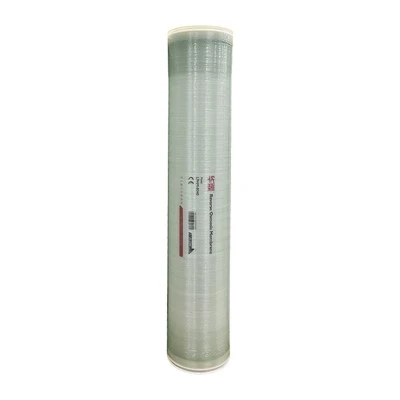
- RO membrane: The heart—only lets pure water through, blocks contaminants. Dirty membranes = bad water, so maintenance is non-negotiable.
- Control panel: The brains. Most modern commercial ROs have digital displays that show pressure, water production, and how much wastewater is being dumped. Newer models even send alerts if something’s off.
- Flush valve: Does what it sounds like—flushes gunk from the membrane after each run to keep it clean. If you forget to trigger this, membranes scale up (build up mineral deposits) and die in a year instead of 3-5.
Pro tip: Have your trainee label each part with a sharpie on the unit itself. Muscle memory is way stronger than a manual. We leave sticky name tags for this, and 9 times out of 10, they still remember what the pre-filter is a week later.
Step 2: Hands-On Drill, Don’t Lecture for 2 Hours
I get it, you’ve got a team that’d rather be doing their actual jobs than sitting through a slide deck. So, cut the lecture to 20 minutes max, then dive straight into hands-on drills. Split your team into pairs—one operator, one note-taker. That way, no one hides in the back.
First drill: Power up and check basics. Walk them through opening the feed water valve, turning the system on, watching the pressure gauge, and checking that the flush valve activates for 2 minutes after start-up. Have them write down the numbers: feed pressure should be between 60-80 PSI (we adjust that per system size, so we give them a cheat sheet for their exact unit). If it’s too low, they need to check if pre-filters are clogged. If too high, they need to adjust the pressure regulator—show them how to turn the knob a quarter-turn at a time, not crank it like a sink faucet.
Second drill: Collect a water sample. This is the “did it work?” test. After 10 minutes of the system running, have them grab a cup of product water (the pure stuff) and a cup of wastewater. Teach them to use a TDS meter—total dissolved solids. The product water should be 90-95% lower than the feed water (if feed is 500 TDS, product should be 25-50 TDS). If it’s higher than that, that means the membrane is bad or dirty. Walk them through flushing the membrane again, and if that doesn’t fix it, run a quick citric acid clean (we send a guide with every unit, so go over that once).
Third drill: Routine maintenance, the boring stuff that prevents breakdowns. This is where most people mess up. Teach them to check pre-filters every month—squeeze them, if they feel crunchy or discolored, replace them. We sell pre-filter bundles at a discount, so tell your team to order replacements 2 weeks before they run out, not wait until one breaks and the system stops working. Also, check the drain line for clogs every other week—wastewater dumping too slow means pressure builds up, which kills the membrane.
I once trained a team at a small bottling company, and their initial training was just a 1-hour manual handoff. They didn’t do hands-on drills, and 3 months later, their membrane failed because they never checked the drain line clog. By the time they called us, they lost $2k in product and had to pay $1,200 for a new membrane. Hands-on = way fewer costly mistakes.
Step 3: Trouble Shoot the Most Common 5 Issues (No Need for a PhD)
Your team doesn’t need to know how to rebuild the pump in 10 minutes, but they do need to fix the stuff that happens every month. We made a one-page cheat sheet for all our customers with the 5 most common problems, and we go over each during training. Let me share that here because it works:
-
Low product water flow:
- Check pre-filters (clogged = flow down) → replace if needed
- Check TDS of product water (if higher, membrane is dirty → do a flush or quick citric clean)
- Check feed pressure (if <50 PSI, open feed valve or adjust regulator)
-
Too much wastewater being dumped:
- This means the system is wasting water. Most of the time, the flush valve is stuck open. Teach them to turn the system off, wait 5 minutes, then turn it back on—if it’s still dumping too much, adjust the flush timer (we show how to tap the control panel and hold the flush button for 3 seconds to change the time, usually set to 2 minutes).
-
Unusual noises (grinding, squealing):
- Grinding = pre-filter is almost clogged → replace it today
- Squealing = high-pressure pump is running dry (no water) → check feed valve is open, don’t run it dry for more than 5 minutes or pump dies
-
Bad taste in product water:
- First, check TDS—if it’s too high, membrane is shot. If TDS is good, that means pre-filters need to be replaced (carbon filters can start tasting like old water if they’re old)
-
System won’t turn on:
- Check power cord and circuit breaker (this is the most common issue, I can’t stress that enough)
- Check that the feed valve isn’t closed (dumb, but it happens)
- If that’s not it, call us—don’t take apart the control panel, we’ll send a tech
Step 4: Train the “Deep Dive” for Backup, Not Everyone
You don’t need every single employee to know how to calibrate the pH adjuster or deep clean the membrane. Pick one person per shift (like the night shift supervisor or the maintenance guy) to get the extra deep dive training. This is the person who can fix the stuff that’s more than a quick tweak.
What’s in the deep dive?
- Full membrane cleaning procedure (citric acid for mineral scale, bleach for organic gunk—we show the correct ratios for your exact membrane)
- Adjusting the pH stabilizer (if your system is for drinking water, sometimes you need to bump pH to prevent corrosion in pipes)
- Replacing the high-pressure pump (rare, but good to know for emergencies)
- Checking the RO system’s flow restrictor (if wastewater flow is way off, that’s the part to adjust)
We do this deep dive either on-site or via a 30-minute video call once the initial training is done. It’s way better than having 5 people half-knowing how to do something and breaking the unit.
Step 5: Refresher Training (Yes, You Need This)
Most clients do one training and then ghost. But after 3 months, your team forgets the little steps—like when to flush the membrane, or that TDS meter isn’t a toy. We recommend a free refresher call 3 months after the initial on-site training, or a quick 15-minute check-in. For our customers that do this, their equipment lasts 1-2 years longer than those who skip it.
Last year, a chain of coffee shops we work with had their training, then skipped the refresher. 8 months later, all 5 shops had membranes that were dying early. They called us, we did a quick zoom refresh, and we had them adjust their flush timers. The next round of membranes lasted 4 years instead of 2. Small thing, big difference.
Now, let’s talk about common mistakes we see clients make all the time, to save you the headache:
- Don’t skip replacing pre-filters: We see clients wait 12 months instead of 6, and that kills the membrane way faster. We include a replacement schedule with every unit, follow it.
- Don’t run the pump dry: If the system stops producing water, turn it off immediately. Running it even a minute with no water burns out the pump.
- Don’t ignore alerts: Most modern RO systems have digital alerts for clogged filters or low pressure. Teach your team to check the control panel every day, not just when the water tastes bad.
- Don’t dump wastewater down the wrong drain: Some commercial spaces have strict rules about water discharge—your wastewater has higher TDS, so don’t dump it into a storm drain (that’s illegal in most areas). We’ll tell you where to dump it during training (usually a sanitary sewer or a dry well).
Wait, quick personal anecdote to drive this home: Last quarter, we had a client that was a small car wash. They had their RO system for reverse osmosis (they use it for their water spot-free drying) and hired a new employee who didn’t get proper training. This guy forgot to trigger the membrane flush for a week, so the membrane scaled up. He tried to “fix” it by cranking up the pressure, which damaged the membrane even more. By the time the manager noticed, they had to replace the $900 membrane and lost 2 days of car wash revenue because the system was down. That’s a $1,500 mistake that could’ve been avoided with 2 hours of hands-on training.
At the end of the day, training isn’t just checking a box. It’s protecting your investment, keeping your business running, and avoiding stupid, costly mistakes.
If you’re in the market for a commercial RO system, or you need a refresher on training for the one you already have, reach out to our team to chat through your specific needs. We do on-site training, virtual deep dives, and send all our clients a step-by-step guide with cheat sheets for every model. No fluff, just actual solutions that work for your space, whether you’re a coffee shop, manufacturing plant, or office park.
Seawater Desalination RO System References:
- American Water Works Association. (2020). Commercial Reverse Osmosis System Operation and Maintenance Manual.
- Water Quality Association. (2021). Best Practices for Training Staff on Commercial Water Treatment Equipment.
- Institute of Food Technologists. (2019). Guidelines for Operation of Reverse Osmosis Systems in Food Service Facilities.
- Ultrafiltration and Reverse Osmosis Society. (2022). Troubleshooting Common Issues in Commercial RO Systems.
- National Sanitation Foundation. (2020). Training Requirements for Water Treatment System Operators in Commercial Settings.
Fujian Huamo Technology Co., Ltd.
Fujian Huamo Technology Co., Ltd. is one of the most professional commercial ro system manufacturers and suppliers in China, featured by quality products and good service. Please rest assured to wholesale the best commercial ro system made in China here and get price list from our factory. Contact us for custom service and OEM service.
Address: No.6 Hengtong Rd, Shanmei Village, Xiamei Town, Nanan City, Fujian Province, China
E-mail: info@huaromembrane.com
WebSite: https://www.hmromembrane.com/
