Skew rolling mills play a crucial role in the metal – forming industry, especially in the production of various cylindrical and stepped parts. As a supplier of skew rolling mill rolls, I have witnessed firsthand how these rolls can significantly impact the rolling yield. In this blog, I will explore the various effects of skew rolling mill rolls on the rolling yield from multiple aspects. Skew Rolling Mill Rolls
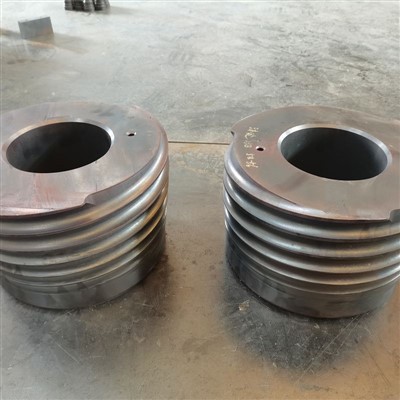
Material and Quality of Rolls
The material of skew rolling mill rolls is of paramount importance. High – quality roll materials can withstand the high pressures and temperatures generated during the rolling process. For example, alloy steel with appropriate alloying elements such as chromium, nickel, and molybdenum can enhance the hardness, wear resistance, and toughness of the rolls.
When the rolls have excellent wear resistance, they maintain their original shape and size for a longer period. This is crucial because any deviation in the roll profile can lead to不均匀 deformation of the workpiece. If the rolls wear out quickly, the dimensional accuracy of the rolled products will be affected, resulting in a higher rate of rejects. For instance, in the production of seamless tubes, if the roll surface is worn unevenly, the wall thickness of the tube may vary, making it difficult to meet the quality requirements and thus reducing the rolling yield.
Moreover, the quality of the roll manufacturing process also matters. Rolls with proper heat treatment and machining accuracy will have better performance. A well – heat – treated roll has a uniform internal structure, which can prevent cracks and other defects during use. Machining accuracy ensures that the roll diameter, surface roughness, and profile meet the design requirements. Any error in the machining process can cause problems such as uneven contact between the roll and the workpiece, which may lead to local over – stress and deformation, and ultimately reduce the rolling yield.
Roll Design and Profile
The design and profile of skew rolling mill rolls are tailored to the specific requirements of the rolled products. Different roll profiles are used for different shapes and sizes of workpieces. For example, in the production of ball bearings, the roll profile is designed to gradually shape the raw material into the spherical shape.
An optimized roll design can improve the material flow during the rolling process. When the roll profile is well – designed, the metal can flow smoothly through the deformation zone, reducing internal stress concentration in the workpiece. This smooth material flow helps to minimize the occurrence of defects such as cracks, folds, and non – uniform cross – sections. For example, in the process of skew rolling shaft – like parts, a well – designed tapered roll can ensure that the metal is evenly distributed along the length of the shaft, improving the dimensional accuracy and surface quality of the product and increasing the rolling yield.
In addition, the roll diameter ratio in a skew – rolling mill is also an important factor. A proper roll diameter ratio can ensure stable operation of the mill and homogeneous deformation of the workpiece. If the roll diameter ratio is not appropriate, it may cause the workpiece to rotate irregularly or slip on the roll surface, resulting in poor product quality and low rolling yield.
Roll Installation and Maintenance
Correct installation of skew rolling mill rolls is essential for achieving high rolling yields. During the installation process, it is necessary to ensure that the rolls are correctly aligned, and the gap between the rolls is set accurately. If the rolls are not aligned properly, the workpiece will be subjected to uneven forces, which can cause it to bend or twist. For example, in a two – roll skew – rolling mill, misaligned rolls can lead to one side of the workpiece being over – rolled while the other side is under – rolled, resulting in a high rejection rate.
Regular maintenance of the rolls is also crucial. This includes cleaning the roll surface, checking for wear and damage, and timely replacement of worn – out parts. A dirty roll surface can cause scratches on the workpiece, affecting its surface quality. By regularly inspecting the rolls, potential problems can be detected early, and corrective measures can be taken to prevent a significant reduction in the rolling yield.
Influence on Productivity
Skew rolling mill rolls can directly impact productivity, which is closely related to the rolling yield. High – quality, well – designed rolls can speed up the rolling process. For example, rolls with good heat – dissipation properties can allow higher rolling speeds because they can handle the heat generated during the high – speed deformation of the workpiece without overheating.
When the rolling process can be carried out at a higher speed, more products can be produced in a given time. This not only increases the overall output but also has a positive impact on the rolling yield. Because in a large – scale production environment, the more products are produced, the more stable the production process is, and the easier it is to control the quality of the products.
Moreover, reliable rolls reduce the frequency of downtime for roll replacement and maintenance. Unplanned downtime can be very costly in terms of lost production time and reduced overall efficiency. By using high – performance rolls, the production line can run continuously, which is beneficial for improving the rolling yield.
Impact on Energy Consumption
Energy consumption is an important consideration in the metal – rolling process. The performance of skew rolling mill rolls can affect energy consumption, which in turn has an indirect impact on the rolling yield.
Rolls with high friction coefficients will require more energy to drive the workpiece through the deformation zone. High friction also means more heat generation, which may lead to overheating of the rolls and the workpiece. This overheating can cause damage to the rolls and affect the quality of the product. On the other hand, rolls with appropriate surface coatings or treatments can reduce friction, thereby reducing the energy required for the rolling process. Lower energy consumption means lower production costs, which can improve the economic efficiency of the production process and contribute to a higher rolling yield.
Cost – Benefit Analysis
As a skew rolling mill roll supplier, I understand that customers are always concerned about the cost – effectiveness of the rolls. Although high – quality rolls may have a higher initial cost, they can bring significant long – term benefits.
The use of high – quality rolls can reduce the reject rate, increase the rolling yield, and improve productivity. These factors combined can lead to a significant reduction in the overall production cost per unit of product. For example, a company that uses low – quality rolls may have a high reject rate of 10%, while by switching to high – quality rolls, the reject rate can be reduced to 2%. This reduction in the reject rate can save a large amount of raw materials, labor, and energy costs, which more than compensates for the higher cost of the high – quality rolls.

In conclusion, skew rolling mill rolls have a profound impact on the rolling yield from multiple aspects, including material and quality, design and profile, installation and maintenance, productivity, energy consumption, and cost – effectiveness. As a supplier, I am committed to providing customers with high – quality skew rolling mill rolls that can help them achieve higher rolling yields and better economic benefits.
Skew Rolling Mill Rolls If you are interested in improving your rolling yield and are looking for reliable skew rolling mill rolls, I invite you to contact me for a detailed discussion. We can explore the best roll solutions based on your specific production requirements.
References
- Smith, J. (2018). Metal Forming Technology. New York: Industrial Press.
- Johnson, R. (2019). Advances in Rolling Mill Design. London: Mechanical Engineering Press.
- Brown, A. (2020). Wear and Fatigue of Rolling Mill Rolls. Tokyo: Materials Science Publisher.
Shenyang Muren Machinery Co., Ltd.
We are one of the most professional skew rolling mill rolls manufacturers and suppliers in China, featured by quality products and good service. Please rest assured to wholesale customized skew rolling mill rolls at competitive price from our factory. Contact us for more details.
Address: No.16 Nansan Road, Shenyang Jinhai Economic Zone, Liaoning Province, China
E-mail: mulunjixie@163.com
WebSite: https://www.symuren.com/
